Hey guys! Air Conditioning Clothes
Let’s cut to the chase: If you’ve worked construction, delivery, or even just spent a long day outdoors in 90°F heat, you know how brutal it can be. I run a small team as an air conditioning clothes supplier, and people hit me up all the time asking, “Are these things actually worth it—for me, and for the planet?”
I get it. These aren’t your grandma’s old cooling vests—they’re lightweight, have small built-in fans, and you can toss them in the wash. But when you’re selling something that uses electricity (even tiny amounts), it’s easy to side-eye the environmental angle. I’ve dug into the science, talked to my customers, and even tested our own gear for a year, so let’s break this down like we’re chatting over a coffee, no stuffy jargon.
First, let’s get the basics: How do AC clothes work, exactly? Most of our line uses two small, rechargeable lithium-ion fans (we use 5000mAh or 10000mAh batteries, for context) that pull air through mesh panels in the shirt. That airflow wicks sweat away so it evaporates faster—way more effective than just a wet towel on your neck, trust me. The batteries are the only part that runs on electricity, right? No compressor, no refrigerants, none of the big, energy-hungry stuff you’d find in a window AC unit.
That’s already a big win for the environment. A standard window AC uses about 5000 watts per hour, and if you run it 8 hours a day in the summer, that’s 40 kWh a day. Our AC clothes? The low-speed fan uses around 2 watts, high-speed is 4 watts. If you’re working 8 hours, that’s 0.016 kWh at low, 0.032 kWh at high. Let’s do the math: Over a full workweek (5 days), that’s 0.08 to 0.16 kWh. Compare that to the window AC’s 200 kWh a week—we’re talking 99% less electricity use. I’ve even had a construction customer in Arizona tell me he runs his window AC half as much once he switched to our gear, because he cools his body instead of his whole shop. That’s a huge energy cut right there.
But wait, let’s not gloss over the lifecycle stuff. Nothing’s perfect, right? We use lithium-ion batteries because they hold a charge longer than other options, but they do have a finite lifespan—usually 2-3 years with regular charging, which is way longer than the lifespan of the shirt itself (a good quality AC shirt lasts 4-5 years if you treat it right, wash it on gentle, don’t yank the fan cords). Then there’s disposal: If you toss a battery in the trash, it can leach lithium and heavy metals, which is bad for soil and water. That’s a real concern, so we’ve partnered with a battery recycling program—we send customers prepaid mailers to send back old batteries, no cost to them, and we make sure they get recycled properly, not landfilled. We also design the clothes so the fans and batteries are easy to remove before washing, so you don’t have to ruin a whole shirt because a battery dies. I made a mistake early on with a product that had sealed battery compartments, and half the customers said they stopped washing the shirts, which led to more bacteria growth and shorter shirt lifespans. Fixed that, and now our return rate for damaged clothes is way down.
Another thing people ask: Do AC clothes make you produce more waste overall? Let’s compare to other cooling options. Single-use ice packs—you get a small cooling vest with disposable ice packs, but you have to throw the packs away every time they melt. A 10-hour shift might need 2-3 ice packs, each of which is non-recyclable plastic. Over a month, that’s 8-12 packs per person, per month. Our rechargeable gear? After the initial purchase (which is a one-time cost), there’s no ongoing waste from packs. Even the water bottles you use to spray your neck for a quick cool-down—you might go through a few a day, which is plastic waste. Our clothes eliminate that, so less single-use plastic. I talked to a delivery driver last summer who stopped buying 2 bottles a day once he got our AC shirt, and he said that cut his plastic waste by 60% in just a month. That adds up across thousands of customers, right?
But let’s talk about the other side: What about the manufacturing impact? Our AC clothes are made with polyester mesh, which is a synthetic fiber. Polyester is plastic, so it’s not as eco-friendly as organic cotton or hemp. But here’s the catch: Regular work shirts (cotton, polyester, whatever) get worn out in 6-12 months for someone who’s on their feet all day. Our AC shirts last 4-5 years, so you’re buying way fewer shirts over time. That means less fabric waste from discarded workwear, which is a huge problem—US textile waste is around 11 million tons a year, most of it workwear. So even if the initial material is plastic, the longer lifespan means less waste overall. We’ve started testing recycled polyester for our next line—using plastic bottles to make the mesh—and the feedback from customers who care about that has been awesome. It’s a work in progress, but we’re moving in that direction.
Also, let’s not sleep on the human side, which ties back to the environment. When workers are cool, they’re more productive, and way less likely to get heatstroke. Heat-related deaths in the US hit over 2500 a year, mostly among outdoor workers. If our gear keeps people safe, they don’t have to take time off, which means less turnover and less need to make new workers (and new gear) all the time. That might sound indirect, but it’s part of the picture—sustainable products aren’t just about materials, they’re about reducing unnecessary consumption. If a worker can stick to one AC shirt for years, instead of going through a new one every year, that’s a win.
Wait, but what about the fans? They’re small, but they’re electronic parts. Do they add e-waste? Let’s be honest, all electronics eventually become e-waste, but our fans have a lifespan of 5-6 years, way longer than a cheap phone charger. And since we make them easy to replace, if a fan breaks, you don’t have to throw the whole shirt away—just swap the fan out for a $20 part. That cuts down on e-waste from our products. We also source the fans from a supplier that uses recycled metal in the casings, so that’s another small win.
I know some of you are thinking, “This sounds too good—what’s the catch?” Let’s be real: If you run the fans 24/7, the battery dies faster, and you have to charge it more, which might lead to a bit more electricity use. But no one runs these 24/7—you only turn the fans on when you’re working, so it’s minimal. Also, if you buy a cheap AC clothes knockoff from Amazon, they use cheaper batteries that don’t hold a charge as long, so you’re charging them more often, and they break in 6 months. Our gear is built to last, so over time, the total environmental impact is way lower.
Here’s the thing I tell every customer: When you choose a good AC clothes set, you’re not just making your workday easier—you’re cutting energy use from cooling, reducing waste from single-use coolants and work shirts, and cutting down on harmful heat-related issues that lead to more consumption. It’s not zero impact, but it’s way better than most alternatives.
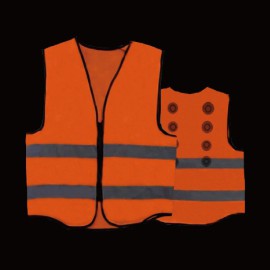
Now, if you’re a business owner, foreman, or just someone who needs these gear for work, and you want to talk through how our products can fit your team’s needs and environmental goals, hit us up to connect for a procurement chat. We’re here to answer questions, walk through our sustainability plans, and make sure you get the right gear without the guesswork.
Handheld Cooling Fan References:
- U.S. Energy Information Administration. (2023). Electricity consumption by residential air conditioning in the United States.
- National Institute for Occupational Safety and Health. (2022). Heat-related illness and death among outdoor workers.
- Textile Exchange. (2023). Global fiber production and waste statistics.
- Lithium Battery Recycling Association. (2021). Consumer battery disposal and recycling best practices.
- Environmental Protection Agency. (2022). Industrial and commercial workwear waste reduction guidelines.
Qiyi Science and Technology Industrial Co., Ltd.
As one of the most professional air conditioning clothes manufacturers and suppliers in China, we offer a wide range of products with superior quality. Please feel free to wholesale durable air conditioning clothes for sale here from our factory. We also accept customized orders.
Address: 8th and 9th floors, Building 17, No.128 Changning Road, Nanhu District, Jiaxing City, Zhejiang Province.
E-mail: 1076613238@qq.com
WebSite: https://www.qy-coolingvest.com/
