As a seasoned provider of Horizontal Machining Centers, I’ve witnessed firsthand the pivotal role that control systems play in these industrial powerhouses. In this blog post, I’d like to delve into the intricate details of what the control system does in a Horizontal Machining Center, explaining its importance, functions, and how it contributes to overall productivity and precision. Horizontal Machining Center
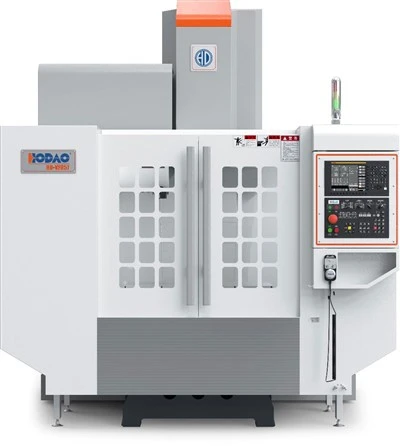
Understanding the Basics of a Horizontal Machining Center
Before we discuss the role of the control system, let’s briefly understand what a Horizontal Machining Center is. A Horizontal Machining Center (HMC) is a type of machine tool used in manufacturing to perform various machining operations such as milling, drilling, boring, and tapping on a workpiece. Unlike vertical machining centers, the spindle in an HMC is oriented horizontally, which offers several advantages such as better chip evacuation, increased stability, and the ability to perform multiple operations in one setup.
The Heart of the Operation: The Control System
The control system of a Horizontal Machining Center is often considered the heart of the machine. It is a complex network of hardware and software components that work together to manage and coordinate all the functions of the HMC. The primary role of the control system is to translate the design specifications provided by the operator into precise movements and actions of the machine’s components.
Programming and Input
One of the fundamental functions of the control system is to accept programming input. This can be done through various methods, such as manual data input (MDI), where the operator enters commands directly into the control panel, or through computer-aided manufacturing (CAM) software, which generates the machining program based on the 3D model of the workpiece. The control system interprets these programs, which are written in a specific programming language such as G-code, and converts them into electrical signals that control the movement of the machine axes.
Axis Control
The control system is responsible for controlling the movement of the machine’s axes. In a typical Horizontal Machining Center, there are at least three linear axes (X, Y, and Z) and often additional rotary axes. The control system precisely regulates the speed, acceleration, and position of each axis to ensure accurate machining. For example, when milling a complex contour, the control system coordinates the movement of multiple axes simultaneously, allowing the cutting tool to follow the desired path with high precision.
Tool Management
Another crucial role of the control system is tool management. In an HMC, there is usually an automatic tool changer (ATC) that can hold multiple cutting tools. The control system keeps track of the tools in the ATC, including their type, size, and location. When a machining operation requires a different tool, the control system commands the ATC to exchange the tools quickly and accurately. This not only saves time but also reduces the risk of human error.
Monitoring and Feedback
The control system continuously monitors the performance of the Horizontal Machining Center. It collects data from various sensors installed on the machine, such as position sensors, temperature sensors, and force sensors. This data is used to provide real-time feedback on the machine’s operation. For example, if the temperature of the spindle exceeds a certain limit, the control system can automatically adjust the machining parameters or even stop the machine to prevent damage. Additionally, the control system can detect tool wear and breakage, allowing for timely tool replacement and minimizing the impact on the quality of the machined parts.
Benefits of a High – Quality Control System in a Horizontal Machining Center
A well – designed and reliable control system offers numerous benefits for both the manufacturer and the end – user of the Horizontal Machining Center.
Precision and Accuracy
The control system is essential for achieving high levels of precision and accuracy in machining. By precisely controlling the movement of the axes and the operation of the cutting tools, it ensures that the machined parts meet the exact specifications. This is particularly important in industries such as aerospace, automotive, and medical, where even the slightest deviation can have significant consequences.
Productivity
A good control system can significantly improve the productivity of a Horizontal Machining Center. It enables faster programming, tool changes, and machining cycles. The ability to automate many of the machining processes reduces the need for manual intervention, allowing operators to focus on other tasks. Additionally, the real – time monitoring and feedback capabilities of the control system help to minimize downtime due to machine breakdowns or tool failures.
Flexibility
The control system provides the Horizontal Machining Center with a high degree of flexibility. It can easily adapt to different machining requirements by simply changing the programming. This allows manufacturers to produce a wide variety of parts with different shapes, sizes, and materials on the same machine, making it a cost – effective solution for small – to – medium – batch production.
Ease of Use
Modern control systems are designed to be user – friendly. They feature intuitive interfaces that make it easy for operators to program, operate, and maintain the Horizontal Machining Center. Even operators with limited technical knowledge can quickly learn how to use the control system, reducing the training time and costs.
Challenges and Future Developments in Control Systems for Horizontal Machining Centers
While control systems have come a long way in improving the performance of Horizontal Machining Centers, there are still some challenges that need to be addressed.
Complexity
As machining requirements become more complex, the control systems also need to become more sophisticated. This increased complexity can make the programming and maintenance of the control system more difficult. Manufacturers are constantly working on developing more user – friendly interfaces and programming tools to simplify the process.
Integration with Other Systems
In today’s manufacturing environment, Horizontal Machining Centers need to be integrated with other systems such as enterprise resource planning (ERP) systems and quality control systems. The control system plays a crucial role in this integration, but ensuring seamless communication and data exchange between different systems can be a challenge.
Cybersecurity
With the increasing connectivity of manufacturing equipment, cybersecurity has become a major concern. The control system of a Horizontal Machining Center is vulnerable to cyberattacks, which can disrupt the production process, steal sensitive data, or even cause physical damage to the machine. Manufacturers are investing in advanced cybersecurity measures to protect their control systems.
Looking to the future, we can expect to see several developments in control systems for Horizontal Machining Centers. Artificial intelligence and machine learning technologies will likely be integrated into the control system to enable self – optimizing machining processes. These technologies can analyze the machining data in real – time and adjust the machining parameters automatically to improve efficiency and quality. Additionally, the development of the Internet of Things (IoT) will further enhance the connectivity and monitoring capabilities of the control system, allowing for remote operation and predictive maintenance.
Conclusion
In conclusion, the control system is an indispensable component of a Horizontal Machining Center. It plays a crucial role in programming, axis control, tool management, and monitoring, which are all essential for achieving high precision, productivity, and flexibility in machining operations. As a Horizontal Machining Center supplier, we understand the importance of providing our customers with high – quality control systems that meet their specific needs.
If you are in the market for a Horizontal Machining Center and are interested in learning more about how our advanced control systems can benefit your manufacturing processes, we encourage you to reach out to us for a detailed discussion. Our team of experts is ready to assist you in finding the right solution for your business.
Profile Machine References
- ASME (American Society of Mechanical Engineers) standards on machine tool control systems
- ISO (International Organization for Standardization) standards related to machining center operations and control
- Technical literature from leading control system manufacturers in the machine tool industry
Taizhou Qiyang Trading Co., Ltd.
As one of the most professional horizontal machining center manufacturers and suppliers in China, we’re featured by quality products and good price. Please rest assured to buy bulk horizontal machining center for sale here and get quotation from our factory. Customized orders are welcome.
Address: Zhenhai Village, Binhai Town, Wenling City, Taizhou City, Zhejiang Province
E-mail: qycncmachine@outlook.com
WebSite: https://www.qycncmachine.com/
