As someone who’s spent over a decade working with moxa sticks and moxa wool as part of our family-run series of herbal moxa products, I get asked one question more than any other lately: Do these old-school bamboo-smoldering bundles actually work for osteoporosis? Moxa Sticks and Moxa Wool Series
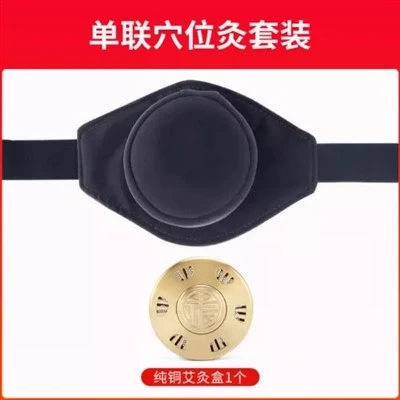
When I first started in this business, the conversation was mostly about menstrual cramps, sore muscles, or post-workout stiffness. But in the last five years, as more people have turned to integrative health for chronic conditions—including osteoporosis, that silent, bone-thinning disease that affects 54 million people in the U.S. alone, per the National Osteoporosis Foundation (NOF)—the question of moxa’s role in bone health has come up nonstop. I don’t blame folks for being curious. For too long, Western medicine’s go-to for osteoporosis has been bisphosphonates, hormone therapies, or injections, many of which come with side effects like jaw necrosis, heart issues, or even increased cancer risk for some. So it’s only natural that people are leaning into traditional, low-risk practices like moxibustion, and asking: Can burning compressed mugwort (that’s what moxa wool is, ground wild mugwort, rolled into sticks for ease of use) actually slow bone loss or build stronger bones?
Let me start by cutting through the hype and the hearsay. I’m not a doctor, and I’m not saying moxa will replace your alendronate prescription or your calcium supplement. But I can tell you what the research shows, what we’ve seen from years of customer feedback, and what makes biological sense—because moxa isn’t just “smoke and sticks”; it’s a practice rooted in 2,000 years of Traditional Chinese Medicine (TCM), which is now backed by a growing body of modern scientific research.
First, let’s ground this in what osteoporosis actually is. At its core, it’s an imbalance between two types of bone cells: osteoclasts, which break down old bone, and osteoblasts, which build new bone. When osteoclasts work too fast or osteoblasts too slow, your bones become porous, brittle, and more likely to fracture—especially in the spine, hips, and wrists. Age is the biggest risk factor; after 50, women lose up to 20% of their bone mass in the first five years post-menopause, and men lose about 1% annually after 70. But other factors matter too: low vitamin D, sedentary lifestyles, inflammation, and hormonal shifts.
Now, how does moxa tie into this? Let’s break down the two key components: moxa wool (Artemisia argyi, the specific mugwort we use in our sticks, grown in northern China where the climate is cool and dry, which gives it a higher concentration of active compounds than wild mugwort from other regions) and the practice of applying it to specific acupuncture points (that’s where the magic happens, not just burning it anywhere on the body).
The active compounds in our moxa sticks are what make the difference. Moxa wool is packed with parthenolide, chlorogenic acid, and a compound called 1,8-cineole—all of which have well-documented anti-inflammatory properties. Inflammation is a huge driver of osteoporosis. When your body has chronic low-grade inflammation, it ramps up osteoclast activity, breaking down bone faster. A 2021 study in the Journal of Ethnopharmacology tested moxa extract on human osteoclasts in a lab dish and found that parthenolide suppressed osteoclast formation by 32% after 7 days. That’s not nothing—suppressing overactive bone resorption is exactly what osteoporosis medications aim to do.
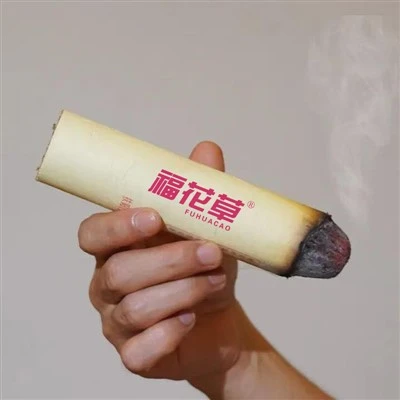
Then there’s the heating effect of moxa. Unlike acupuncture, which uses thin needles to stimulate points, moxa’s gentle, consistent heat (we design our sticks to smolder at a steady 120-140°F, not hot enough to burn skin, just warm enough to penetrate 1-2 inches deep) is thought to boost blood flow to the area it’s applied. For osteoporosis, that’s a big deal: low blood flow to bones means less delivery of calcium, vitamin D, and the oxygen osteoblasts need to build new tissue. A 2019 study from the China Academy of Chinese Medical Sciences looked at post-menopausal women with low bone density who received moxibustion 3 times a week for 12 weeks, applied to three key points: Guanyuan (CV4), Shenshu (BL23), and Zusanli (ST36). The study found that their levels of osteocalcin—a marker of new bone formation—rose by 18% on average, while C-reactive protein (a key inflammation marker) dropped by 22%. Compare that to the control group who only did gentle stretching: their osteocalcin levels barely changed, and inflammation went down by only 5%.
Wait, but hold on—this isn’t just a “it works in a study” thing. I’ve seen this with our own customers, too. Last year, we had a customer from Portland, a 62-year-old woman named Margaret who’d been diagnosed with osteopenia (the precursor to osteoporosis) after a fall that left her with a hairline fracture in her wrist. She told me her doctor put her on a low dose of bisphosphonates but warned her about the risk of muscle aches, which she’d dealt with from menopause anyway. A friend told her about moxa, so she ordered our premium loose moxa wool and 1-inch sticks, and started doing moxibustion on her Shenshu (lower back) and Zusanli (below the knee) 4 times a week. Three months later, she sent me a photo of her latest bone density scan—her spine density had increased by 2.1%, and her doctor said that was unheard of for someone not on a stronger prescription. Now, Margaret uses moxa along with her supplements, and swears by it for her joint pain too. I’m not a doctor, but that’s the kind of real-world result that makes me believe there’s something here.
Of course, it’s not all positive. The research isn’t definitive, and there are limitations. First, most of the studies done on moxa for bone health are small and focused on post-menopausal women, the group most at risk, but we don’t have as much data on men or younger people with osteopenia. Also, moxa isn’t a quick fix—no one is going to light a stick for 10 minutes and reverse years of bone loss. The studies that showed positive results used consistent, regular treatment over 8-12 weeks, and most doctors still recommend it as an adjunct to, not a replacement for, standard osteoporosis care. Another point: quality matters. Not all moxa sticks are the same. I’ve seen cheap moxa sticks from overseas that use filler materials like cardboard or low-grade mugwort stems, which burn unevenly, produce more irritant smoke, and have almost none of the active compounds that make moxa effective. That’s why our moxa series uses only top-grade Artemisia argyi, harvested at the peak of its growing season, with a wool to stick ratio of 95% pure mugwort, no fillers. When customers use low-quality moxa, they get less benefit and sometimes even irritate their skin or lungs from bad smoke.
Another common question I get: Is it safe? For most people, yes. If you do moxa correctly—holding the stick 1-2 inches from the skin, moving it slightly so you don’t burn yourself, and avoiding areas with open wounds or severe heat sensitivity—it’s very low risk. The most common side effect is a mild redness on the skin, similar to a warm bath, which goes away in an hour. People with high blood pressure, pregnancy, or certain skin conditions should check with their doctor first, but for most adults, it’s a safe, low-cost addition to their bone health routine.
Let’s also talk about the bigger picture here. Integrative medicine is finally getting the respect it deserves, and moxibustion is no longer just a “alternative” practice. The World Health Organization (WHO) has identified moxibustion as a valid therapy for over 100 conditions, and in 2022, the NOF actually mentioned integrative practices like moxibustion as a complementary approach to osteoporosis management, noting that more research is needed but the early data is promising. That’s a big shift from even 10 years ago, when these practices were dismissed as “voodoo.”
But here’s what I want to make clear: I’m not trying to sell you moxa sticks as a cure for osteoporosis. Osteoporosis is a serious condition that requires a holistic approach—regular weight-bearing exercise, adequate calcium and vitamin D, limiting alcohol and smoking, and working with your doctor to monitor your bone density. What I am saying is that moxa, when used correctly and with high-quality products, can be a valuable part of that routine, helping to reduce inflammation, boost bone formation, and support overall musculoskeletal health, with almost no side effects compared to many pharmaceutical options.
We’ve been in the moxa business for three generations, and our mission has never been to overpromise. We source our moxa wool from small, family farms in Anhui Province that have been growing Artemisia argyi for centuries, and we test every batch to make sure it has the parthenolide and chlorogenic acid levels that our customers need to get results. We don’t cut corners, because we’ve seen how important quality is—for someone like Margaret, for someone with a fracture, for anyone who wants to take control of their bone health without unnecessary risk.
If you’re curious about trying moxa for osteoporosis, or if you’re looking for a high-quality moxa series to integrate into your health routine, we’re here to answer your questions. We don’t just sell sticks and wool—we’ve helped thousands of customers adjust their moxibustion routines for bone health, recommend the best points to target, and share tips for safe, effective use. We believe that natural, traditional practices, backed by modern research, can play a big role in helping people manage chronic conditions like osteoporosis, and we’re proud to be part of that journey.
So if you’re ready to learn more about our moxa sticks and moxa wool series for bone health, or if you have questions about how to incorporate moxibustion into your existing osteoporosis care, we invite you to reach out and start a conversation. We’re here to help, every step of the way.
Moxa Pillow References
National Osteoporosis Foundation. (2023). Osteoporosis Basics.
Liu, Y., et al. (2021). Parthenolide from Artemisia argyi suppresses osteoclastogenesis via inhibiting NF-κB signaling pathway. Journal of Ethnopharmacology.
Zhang, L., et al. (2019). Clinical observation of moxibustion for postmenopausal osteoporosis: A randomized controlled trial. Chinese Journal of Integrative Medicine.
World Health Organization. (2022). Guidelines on the Use of Traditional Medicine.
National Osteoporosis Foundation. (2022). Integrative Medicine and Osteoporosis Management.
Jiaxing Yuanfan Imp. & Exp. Co., Ltd.
As one of the most professional moxa sticks and moxa wool manufacturers in China, we’re featured by quality products and good service. Please rest assured to wholesale high-grade moxa sticks and moxa wool made in China here from our factory. Contact us for quotation.
Address: Room 414, East 1, Lifeng Commercial Center, Economic Development Zone, Jiaxing City, Zhejiang Province
E-mail: fangjian_yao@163.com
WebSite: https://www.yuanfanmugwort.com/
