Hey everyone, it’s Jake here—your go-to guy for all things ultrafiltration (UF) cassettes. If you’ve ever spent time troubleshooting a UF system that’s running slow, fouling way too fast, or just not meeting the specs your process needs, I bet you’ve asked yourself: “Wait, is the membrane material the actual problem here?” Let me tell you, nine times out of 10, that’s exactly where the issue starts. I’ve been selling UF cassettes for 8 years now, and I can’t tell you how many times I’ve gotten a frantic call from a customer saying their system is trash—turns out they grabbed cheap generic cassettes without looking at what the membrane was made of. Today, let’s cut through the jargon and break down how membrane material actually messes with (or makes) UF cassette performance. Ultrafiltration Cassettes
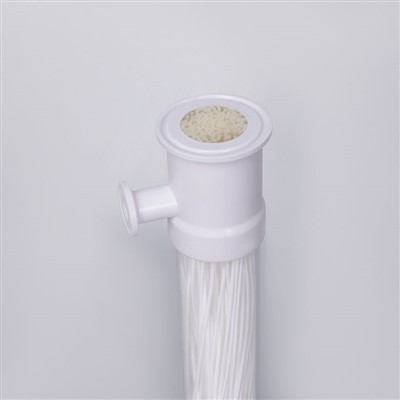
First, let’s get on the same page quick. UF cassettes are those flat-pack, stackable UF elements used in everything from food and beverage (clarifying juice, filtering beer) to biopharma (purifying antibodies) and municipal water treatment (removing colloids or bacteria). The “membrane” is the thin, porous core that does all the work—separating the stuff you want from the stuff you don’t. But not all membranes are created equal. The material they’re made of changes literally every performance metric you care about: flux rate, fouling resistance, retention, cleanability, and lifespan. Let’s go through each of these one by one, with real examples from customers I’ve worked with, not just textbook stuff.
Let’s start with the most obvious one: Flux rate. That’s how much water (or feed solution) passes through the membrane per square meter per hour—basically, how fast your system runs. If flux is too low, you’re wasting time and money pumping more solution, which drives up energy costs. Guess what the biggest driver of initial flux is? Pore size, yeah, but also the material’s surface chemistry, specifically its hydrophilicity (how “water-loving” it is). Hydrophobic (water-hating) materials repel water, so you have to run way higher pressure just to get solution through the membrane. That translates straight to higher energy bills. I once had a craft brewery client in Wisconsin who was using a generic polypropylene (PP) cassette for filtering wort. PP is super hydrophobic—they were running 30 psi just to hit their target flux, and their energy costs were through the roof. Switched them to our polyethersulfone (PES) cassettes, which are inherently way more hydrophilic, and they cut their operating pressure by 40% without even changing anything else. Same pore size, same cassette design—just different membrane material. Game changer. Not to mention, some materials can be engineered with more uniform pore sizes too. If pores are inconsistent, some are way too big (so you get bad retention of the stuff you need) and some are too small (dragging down overall flux). We use a phase inversion process for our PES membranes that gives us 95% pore size uniformity, so our customers get consistent flux from day one, no surprises.
Next up—fouling resistance. This is the big one, because fouling is like a slow cancer for UF systems. It’s when gunk (colloids, proteins, fats, microbes) sticks to the membrane surface or clogs the pores, so flux drops over time, and you have to clean way more often. The material’s surface charge and roughness are the main culprits here. Let’s talk surface charge first. Most of the gunk you’re filtering (especially in biopharma or food and beverage) has a slight negative charge at neutral pH. If your membrane is also negative, you get repulsion—gunk doesn’t stick. But if your membrane is positive or neutral? All that gunk sticks right to it. I had a biotech startup last year that was using a cellulose acetate (CA) cassette for purifying monoclonal antibodies. CA membranes have a slightly positive surface charge at their working pH, so antibody aggregates and cell debris were sticking like crazy. They were cleaning their cassettes every 24 hours, down time was killing their batch schedule. Switched them to our modified PES membranes, which we surface-treat to have a slight negative charge at process pH, and now they only clean once every 72 hours. Less down time, less cleaning chemicals, less wear on the cassettes. Even better, surface roughness plays a part too. Rougher membranes have more nooks and crannies for gunk to get caught in, so fouling happens faster. Our PES membranes are milled to a smooth, consistent surface (nanometer-level roughness) compared to older, rough membrane materials like unmodified CA or PP. That’s why our cassettes have a 20-30% longer time between cleanings than competing generic brands.
Then there’s retention—meaning how well the membrane keeps the stuff you want separated. For UF, we’re usually targeting a specific molecular weight cutoff (MWCO), like 10 kDa or 100 kDa. But the membrane material affects how well that MWCO holds up over time, not just right out of the box. Some materials, like cellulose acetate, are more susceptible to hydrolysis (breaking down from water, especially at extreme pH). If that happens, the pores get bigger, so your retention drops—you’re not keeping the small stuff you need anymore, and you have to replace cassettes way sooner. I had a municipal water treatment plant a couple years back that was using CA cassettes for removing giardia and cryptosporidium (which are ~1-10 kDa). They were running them at pH 10 during cleaning, which is harsh on CA. After 3 months, their retention dropped by 15%, and they had to start testing for breakthrough. Switched them to our PES cassettes, which are pH-stable from pH 2 to 12, no hydrolysis. After 6 months, their retention was still at 99.99%—same as day one. That saved them thousands in unnecessary testing and cassette replacements. Also, some materials are better at retaining specific types of molecules. For example, if you’re filtering oily solutions (like cutting fluid in metalworking), a hydrophobic PP membrane might actually hold onto the oil better than a hydrophilic PES one, because oil likes the PP. That’s why we don’t push PES for every application—we match the membrane material to the feed stream, not just the MWCO. That’s a mistake a lot of cheap cassette vendors make—they sell the same generic material for everything, regardless of what the customer is filtering.
Cleanability is tied directly to fouling resistance, but it’s its own performance metric. Even if you reduce fouling a bit, if the membrane is hard to clean, you’ll still have to replace it more often. Cleanability comes down to two things: how easily the fouling layer can be removed, and how resistant the membrane is to cleaning chemicals. CA membranes, for example, can’t handle strong oxidizers like bleach (sodium hypochlorite), which is the cheapest and most effective cleaning agent for UF. If you use bleach on CA, it breaks down the membrane, makes pores bigger, and retention drops. So those customers have to use more expensive, less effective cleaning chemicals, which drives up costs. Our PES membranes are oxidizer-stable—we can use up to 500 ppm bleach during CIP (clean-in-place) cycles, which cuts cleaning time by half and reduces chemical costs by 35% on average. We also do a lot of custom surface modification for customers with super tricky fouling problems—like if you’re filtering dairy whey, which has a lot of fat and protein. We can make a PES membrane that’s both hydrophilic and has a smooth, anti-adhesive surface, so even if gunk does stick, it comes right off during a standard cleaning cycle. I had a whey processor in Ohio that was using unmodified PES cassettes and getting 50% recovery of whey protein after cleaning—switched to our modified version, and recovery jumped to 85%. That’s a huge deal for them because whey protein is their main product, and every percent recovery is extra revenue.
Lifespan, obviously, is the end result of all these factors. A membrane that fouls fast, is hard to clean, and breaks down in chemicals won’t last as long as one that’s engineered for the job. Let’s do a real comparison I saw last year: a customer in food and beverage was using generic PP cassettes (costing ~$120 each) and had to replace them every 3 months. That’s $480 a year per cassette. Switched to our PES cassettes (costing ~$180 each) and they lasted 12 months. Per year, that’s $180 vs $480—almost 60% savings, plus less down time from changing cassettes. I see this all the time—customers fixate on the upfront cost of the cassette, but they ignore the operating costs (energy, cleaning chemicals, down time, replacement frequency) that come with cheap, wrong membrane materials. That’s our whole pitch: upfront costs might be a bit higher, but the total cost of ownership is way lower.
Wait, let’s not forget to talk about specialty membrane materials, too, because that’s where we really differentiate ourselves. For example, if you’re in the biopharma space, you need membranes that are biocompatible—no leachables that will contaminate your drug product. A lot of generic membranes use low-grade polymers that can leach plasticizers or residual monomers, which is a big no-no for FDA compliance. We make our biopharma-grade cassettes with medical-grade PES, which is tested and certified for biocompatibility, no detectable leachables, and meets all FDA and ICH guidelines. That’s the stuff that makes customers in regulated industries sleep well at night—they don’t have to worry about a batch of drugs being rejected because of cassette-related contamination. Then there’s PTFE (polytetrafluoroethylene) for super harsh feeds—like strong acids or bases, or hot solutions up to 120°C. PTFE is totally inert, so it doesn’t break down in those conditions, which makes it perfect for applications like chemical processing or wastewater treatment. We have a line of PTFE cassettes that’s taken off with metal plating facilities that filter acidic rinse water—they’ve told us these cassettes last 2-3 times longer than any other PTFE brand they’ve tried.
Now, let’s be real—there’s no “perfect” membrane material. That’s why we don’t try to sell one size fits all. If you tell me you’re filtering cold, clean water to remove bacteria, maybe CA is fine (it’s cheaper, and works well for that). If you’re filtering hot, oily cutting fluid, PP is a better fit. If you’re doing biopharma purification with harsh CIP, modified PES is the way to go. If you’re dealing with extreme pH or high temps, PTFE is your guy. The mistake most customers make is buying whatever the cheapest cassette is online, without asking the vendor what the membrane is made of, or what it’s tested for. I’ve had customers call me upset because their new cassettes are fouling after a week, and when I ask what material they are, it’s some random polyamide that no one’s tested for that specific application. That’s avoidable.
Let me wrap this up with a quick takeaway, because I know you’re here for actionable stuff. When you’re shopping for UF cassettes, don’t just look at the MWCO and the price tag. Ask three questions: 1) What’s the membrane material? And is it compatible with my feed stream (pH, temperature, foulants, chemicals)? 2) What’s the surface chemistry and roughness? Does it help reduce fouling, or make it worse? 3) What’s the cleanability and stability? Can I use standard cleaning chemicals, and will the membrane hold up to CIP cycles? These are the things that separate a cassette that works for 6 months from one that works for 2 years.

Look, I’m a supplier, but I’m also a UF geek who’s worked with hundreds of customers across every industry. I’ve seen first-hand how the wrong membrane material can tank a whole process, and how the right one can make your system run like a dream. If you’re currently dealing with a UF system that’s underperforming, or if you’re just ready to upgrade from your generic cassettes to something that actually matches your needs, hit me up. I don’t do pushy sales calls—just tell me what you’re filtering, at what conditions, and what your pain points are, and I’ll help you pick the right membrane material and cassettes for your process. No weird hidden fees, no generic one-size-fits-all garbage. Just real advice from someone who’s been in this game long enough to know what works.
Process Development References:
- Baker, R. W. Membrane Technology and Applications, 3rd ed. Wiley, 2012.
- Kim, J., et al. “Surface Modification of Polyethersulfone Membranes for Improved Fouling Resistance in Bioprocessing.” Journal of Membrane Science, vol. 427, 2013, pp. 236-244.
- State of the Art of Ultrafiltration Membrane Materials and Performance. International Desalination Association, 2021.
- Madaeni, S. S. “The Effect of Membrane Material on Fouling in Ultrafiltration of Dairy Wastewater.” Desalination, vol. 122, no. 2-3, 1999, pp. 189-197.
Hangzhou Guidling Technology Co., Ltd.
As one of the leading ultrafiltration cassettes manufacturers and suppliers in China, we also support customized service. We warmly welcome you to wholesale high quality ultrafiltration cassettes in stock here from our factory. For quotation, contact us now.
Address: No.795, 18th Street, Qiantang New District, Hangzhou City, Zhejiang Province, China
E-mail: export1@guidling.net
WebSite: https://www.guidlingfiltration.com/
