Hey there! As a supplier of DC gearmotors, I’ve seen firsthand how the size of these motors can significantly impact their performance. In this blog post, I’m gonna break down how different sizes of DC gearmotors play out in real – world applications. Dc Gearmotor
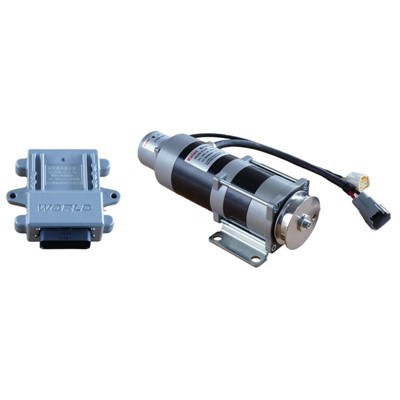
Let’s start with the basics. A DC gearmotor combines a DC motor with a gearbox. The motor creates the power, and the gearbox adjusts the speed and torque according to the needs of the application. When we talk about the size of a DC gearmotor, we’re mainly considering physical dimensions like length, diameter, and weight, as well as the internal components’ size.
Small – Sized DC Gearmotors
Small – sized DC gearmotors are super popular in a ton of applications. They’re usually compact, lightweight, and consume less power. One of the biggest perks of a small DC gearmotor is its portability. For example, in small robotics projects or handheld devices, size and weight matter a great deal. These motors can be easily integrated into the design without adding much bulk.
Regarding performance, small motors typically have lower torque output. This is because the smaller the motor, the less space there is for components like magnets and coils that generate power. But don’t let that fool you. They can still be pretty useful in applications that don’t require a lot of force. Take a small RC car, for instance. It doesn’t need a high – torque motor to move around. A small DC gearmotor can provide just the right amount of speed and enough torque to make the car run smoothly.
Another area where small DC gearmotors shine is in applications with limited power. For example, in battery – powered sensor systems, the motor has to work within the constraints of the available power. Smaller motors draw less current, which means they can operate for longer periods on a single battery charge. However, their speed might be a bit inconsistent, especially under load. Since they have less power reserve, any additional load can cause the speed to drop more significantly compared to larger motors.
Medium – Sized DC Gearmotors
Medium – sized DC gearmotors strike a nice balance between power and size. They’re bigger than the small ones, so they can handle more demanding applications. In home automation, for example, medium – sized gearmotors are often used in window blinds or garage door openers. These applications require more torque than a small motor can provide but don’t need the extreme power of a large motor.
The performance of medium – sized DC gearmotors is more stable compared to small ones. They have a better power – to – weight ratio, which means they can deliver a good amount of torque without being overly bulky. Their speed control is also more precise, thanks to the larger and more robust internal components. This makes them ideal for applications where accuracy matters, such as in some small industrial machinery.
However, medium – sized motors do consume more power than their smaller counterparts. This is something to keep in mind when designing a system. If power efficiency is a top priority, you might need to carefully consider the trade – off between the additional performance and the increased power consumption.
Large – Sized DC Gearmotors
Large – sized DC gearmotors are the heavyweights of the bunch. They’re built for applications that require a massive amount of torque. In industrial settings, you’ll see them used in conveyor belts, large winches, and heavy – duty machinery. These motors can handle large loads and operate continuously for long periods.
The performance of large DC gearmotors is all about power and durability. They have large magnets and thick coils, which can generate a huge amount of torque. Their gearboxes are also designed to withstand high – stress operations. This means they can maintain a consistent speed and torque even under heavy loads.
But there are some downsides to large – sized motors. First of all, they’re huge and heavy, which makes installation and integration more challenging. They also consume a significant amount of power, which can lead to higher operating costs. And because of their size and complexity, maintenance can be more difficult and expensive.
Impact on Efficiency
The size of a DC gearmotor also has a major impact on its efficiency. Generally, large – sized motors are more efficient at high – load conditions. This is because they have more room for better heat dissipation and can use higher – quality materials for their components. Smaller motors, on the other hand, can be more efficient at low – load applications because they don’t have the overhead of powering large components that aren’t needed.
When choosing the right – sized DC gearmotor for your application, you need to consider the load characteristics. If your application mostly operates at low loads, a small motor might be the most efficient choice. But if you have a high – load, continuous – operation application, a large motor will likely be more efficient in the long run.
Impact on Speed and Torque
The relationship between size, speed, and torque is a crucial factor. As a general rule, larger motors tend to produce more torque but may have lower maximum speeds. Smaller motors, on the contrary, can achieve higher speeds but with lower torque. The gearbox plays a key role in this equation. It can be designed to trade off between speed and torque depending on the needs of the application.
For example, in a drill press, you need high torque at low speeds to drill through tough materials. A large – sized DC gearmotor with an appropriate gearbox can provide the necessary torque. On the other hand, in a high – speed fan, you need a motor that can spin quickly, and a small DC gearmotor might be more suitable.
How to Choose the Right Size
As a DC gearmotor supplier, I often get asked how to choose the right size. Well, it all comes down to your application. You need to consider the load requirements, power availability, space constraints, and the desired speed – torque characteristics.
If you’re working on a small, battery – powered project, start by looking at small DC gearmotors. Make sure to check the torque – speed curve to ensure it meets your needs. For medium – scale applications like home automation, a medium – sized motor can offer a good balance of performance and cost. And for heavy – duty industrial applications, you’ll probably need a large – sized DC gearmotor, but be prepared for the higher power consumption and maintenance costs.
In conclusion, the size of a DC gearmotor has a profound impact on its performance. Each size brings its own set of advantages and disadvantages. Whether it’s the portability and low – power consumption of small motors, the balance of medium – sized motors, or the high – torque capabilities of large motors, there’s a perfect size for every application.
Permanent Magnet DC Moto If you’re in the market for a DC gearmotor and need help figuring out the right size for your project, don’t hesitate to reach out. We can offer expert advice and high – quality products to meet your specific needs. Whether you need a single motor for a small DIY project or a large quantity for an industrial application, we’ve got you covered. Contact us to start the procurement conversation and let’s find the ideal DC gearmotor for your business!
References
- "Motion Control Basics" by Yaskawa America, Inc.
- "Electric Motors and Drives: Fundamentals, Types and Applications" by Austin Hughes and Bill Drury
Zibo Auric Mechanical and Electrical Technology Co., Ltd.
As one of the leading dc gearmotor manufacturers and suppliers in China, we warmly welcome you to buy advanced dc gearmotor for sale here from our factory. All customized motors are with high quality and competitive price.
Address: B419, High-tech Entrepreneurship Park, High-tech Zone, Zibo City
E-mail: cui@auricmotor.com
WebSite: https://www.auricmotor.com/
