Quartz abrasive media, a versatile and reliable material, has found a wide range of applications in the Dynamic Mechanical Analysis (DMA) industry. As a supplier of high – quality quartz abrasive media, I am well – versed in the various ways this remarkable material benefits the DMA field. In this blog, I’ll explore the key applications of quartz abrasive media in DMA and explain why it has become an essential component in this industry. Quartz Abrasive Media

1. Sample Preparation
One of the primary applications of quartz abrasive media in the DMA industry is sample preparation. In DMA, accurate and consistent sample dimensions and surface conditions are crucial for obtaining reliable results. Quartz abrasive media, with its excellent hardness and abrasion resistance, can be used to shape and finish test specimens.
For polymers, composite materials, and other viscoelastic substances commonly analyzed in DMA, surface imperfections can significantly affect the mechanical response during testing. By using quartz abrasive media, we can ensure that the samples have smooth and uniform surfaces. For instance, in the case of composite laminates, surface roughness can cause stress concentrations that may lead to inaccurate modulus and damping measurements. Quartz abrasive media can be used in grinding and polishing processes to remove any irregularities on the laminate surface, thereby improving the accuracy of DMA results.
Moreover, when preparing samples with specific geometric shapes, such as rectangular bars or circular discs, quartz abrasive media can be employed in precision machining operations. The controlled abrasion provided by quartz media allows for the precise adjustment of sample dimensions, ensuring that they meet the requirements of DMA testing fixtures. This is particularly important for small – scale samples, where even minor dimensional variations can introduce significant errors in mechanical property measurements.
2. Conditioning of DMA Testing Fixtures
In addition to sample preparation, quartz abrasive media is used for the conditioning of DMA testing fixtures. The components of DMA testing fixtures, such as clamps, probes, and sensors, are subject to wear and tear due to repeated use with different samples. Over time, the accumulation of debris, scratches, and surface damage on these components can affect the accuracy and reproducibility of DMA measurements.
Quartz abrasive media can be used to clean and rejuvenate the surfaces of these testing fixtures. By using appropriate abrasive grades, we can remove any contaminants or oxidation layers on the metal or ceramic surfaces of the fixtures. This not only restores the cleanliness of the components but also helps to maintain their original surface finish. For example, the contacting surfaces of clamps need to provide a firm grip on the sample without introducing unwanted stress or deformation. Using quartz abrasive media to polish these clamping surfaces can ensure a uniform contact pressure distribution, which is essential for accurate DMA measurements.
Furthermore, the use of quartz abrasive media can help to calibrate the movement and sensitivity of DMA sensors. By gently abrading the sensor surfaces, we can optimize their response to mechanical stimuli, improving the overall performance of the DMA instrument. This is especially important in high – precision DMA applications, where even small changes in sensor performance can lead to significant errors in data interpretation.
3. Improvement of Friction Characteristics
Friction plays a critical role in DMA measurements, especially when studying the viscoelastic behavior of materials under different loading conditions. Quartz abrasive media can be used to modify the friction characteristics of both the sample and the testing environment.
In some DMA tests, such as those involving sliding or rolling contact, the friction between the sample and the testing surface can affect the measured mechanical properties. By applying a thin layer of quartz abrasive particles on the contact surfaces, we can adjust the friction coefficient. This is useful for simulating real – world conditions where frictional forces are present, such as in automotive components or aerospace materials.
For example, when testing rubber materials for tire applications, the friction between the tire tread and the road surface is an important factor. By using quartz abrasive media to create a rough surface on the DMA testing platform, we can more accurately simulate the frictional behavior of tires on the road. This allows for more realistic assessments of rubber materials’ viscoelastic properties, such as hysteresis and damping, which are directly related to tire performance, including traction and rolling resistance.
4. Facilitation of Heat Transfer
Heat transfer is another important aspect in DMA, especially when conducting temperature – dependent measurements. Some materials’ mechanical properties are highly sensitive to temperature, and proper heat transfer during testing is essential for obtaining accurate data.
Quartz abrasive media has good thermal conductivity properties, which can be used to enhance heat transfer between the sample and the testing environment. In DMA setups, heaters or cooling elements are often used to control the sample’s temperature. By using quartz abrasive media to improve the contact between the sample and the temperature – controlling components, we can enhance the efficiency of heat transfer.
For example, in a DMA test chamber, the sample may be in contact with a metal plate that is connected to a heating or cooling system. If the sample – plate interface has poor contact, heat transfer will be inefficient, leading to temperature gradients within the sample. This can cause inaccurate measurements of the material’s temperature – dependent mechanical properties. By using quartz abrasive media to polish the sample and plate surfaces, we can increase the contact area and improve heat transfer, ensuring a more uniform temperature distribution within the sample during DMA testing.
5. Enhancement of Chemical Resistance in Testing Environments
In some DMA applications, the samples and testing fixtures may be exposed to various chemical substances. This can occur, for example, in the study of materials used in chemical processing plants or in the presence of corrosive environments.
Quartz abrasive media is chemically inert and highly resistant to a wide range of chemicals. When used in the preparation of samples or the conditioning of testing fixtures, it can help to enhance the overall chemical resistance of the DMA testing environment. For instance, if a sample is being tested in a solution containing acids or alkalis, using quartz abrasive media to finish the sample surface can prevent chemical attack on the sample, ensuring that the measured mechanical properties are not affected by chemical degradation.
Similarly, for testing fixtures that are in contact with corrosive substances, coating or treating the surfaces with quartz abrasive media can provide a protective layer. This layer can prevent the corrosion of the fixture components, maintaining their structural integrity and functionality over time. This is particularly important for long – term or repeated DMA testing, where the durability of the testing equipment is crucial for obtaining consistent and reliable results.
Why Choose Our Quartz Abrasive Media
As a supplier of quartz abrasive media, we take pride in offering products that meet the highest quality standards. Our quartz abrasive media is sourced from premium raw materials and processed using advanced manufacturing techniques. This ensures that our media has consistent particle size, shape, and hardness, which are essential for achieving accurate and reproducible results in DMA applications.
We also provide a wide range of abrasive grades to meet the diverse needs of the DMA industry. Whether you need a coarse grit for rapid material removal during sample preparation or a fine grit for precision polishing of testing fixtures, we have the right product for you. Our technical support team is always ready to assist you in selecting the most suitable quartz abrasive media for your specific DMA requirements.
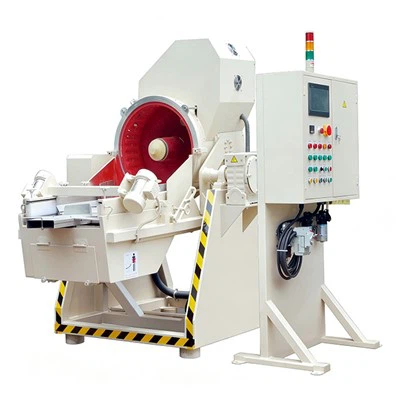
Grinding Polishing Machine If you are in the DMA industry and are looking for a reliable quartz abrasive media supplier, we invite you to contact us to discuss your procurement needs. We are confident that our products will help you improve the accuracy and efficiency of your DMA testing processes.
References
- ASTM International. Standard practices and test methods related to Dynamic Mechanical Analysis.
- "Handbook of Viscoelastic Materials" – a comprehensive resource on the properties and testing of viscoelastic substances, including the role of sample preparation in DMA.
- Journal articles in materials science and engineering, specifically those focused on the application of abrasive media in mechanical testing.
Dongguan Xindingsheng Intelligent Grinding Technology Co., Ltd.
Dongguan Xindingsheng Intelligent Grinding Technology Co., Ltd. is one of the most reliable quartz abrasive media manufacturers and suppliers in China, also supports customized service. Please feel free to wholesale bulk high quality quartz abrasive media in stock here from our factory. Contact us for pricelist.
Address: Room 101, Building 1, No. 73 Dahuangmei Road, Dalingshan Town, Dongguan City, Guangdong Province, China
E-mail: cndskj@126.com
WebSite: https://www.xdsfinishing.com/
