Condensers are indispensable components in a wide range of industries and applications, playing a crucial role in heat transfer processes. As a condenser supplier, I’ve witnessed firsthand the diverse settings where these devices are used and the significant impact they have on various operations. In this blog, I’ll delve into the primary areas where condensers are utilized, highlighting their importance and functionality. Condenser
HVAC Systems
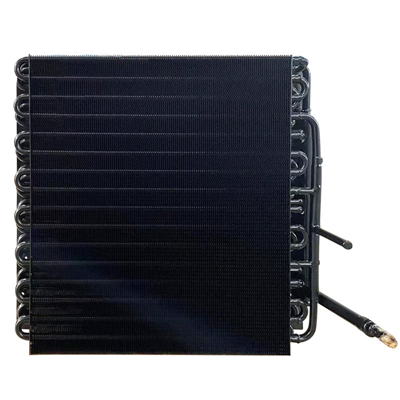
One of the most common applications of condensers is in heating, ventilation, and air – conditioning (HVAC) systems. In an air – conditioning unit, the condenser is responsible for converting high – pressure, high – temperature refrigerant vapor into a liquid state. This phase change releases heat to the outside environment, allowing the refrigerant to circulate back through the system and absorb more heat from the indoor air.
Central air – conditioning systems in commercial buildings rely heavily on condensers to maintain a comfortable indoor climate. Large – scale HVAC systems in office buildings, hotels, and hospitals often feature multiple condensers to handle the high cooling loads. These condensers are typically located outside the building, either on the roof or at the ground level. They can be either air – cooled or water – cooled, depending on the specific requirements of the system.
Residential air – conditioning units also use condensers. Window air conditioners have a built – in condenser unit that expels heat through the side facing the outside. Split – system air conditioners, which are more common in modern homes, have an outdoor condenser unit connected to an indoor evaporator unit. The efficiency of the condenser directly impacts the energy consumption and performance of the entire HVAC system. A well – functioning condenser can significantly reduce electricity bills and provide a more consistent cooling experience.
Power Generation
Power generation is another major area where condensers are extensively used. In steam power plants, condensers play a vital role in the Rankine cycle, which is the fundamental operating cycle for most steam turbines. After the steam passes through the turbine and loses its energy by doing work, it enters the condenser.
The condenser cools the steam, causing it to condense back into water. This process creates a vacuum in the condenser, which helps to increase the efficiency of the turbine. The condensed water is then pumped back to the boiler to be reheated and converted into steam again. This closed – loop cycle allows for efficient use of the thermal energy in the power plant.
Most power plants use large water – cooled condensers. These condensers require a large volume of water, usually from a lake, river, or ocean, to absorb the heat from the steam. In some regions where water availability is limited, air – cooled condensers are used instead. Although air – cooled condensers are less efficient than water – cooled ones, they eliminate the need for large water sources and reduce the environmental impact associated with water withdrawal and discharge.
In addition to traditional fossil – fuel power plants, condensers are also used in nuclear power plants. Nuclear power plants work on the same basic principle as fossil – fuel plants, but they use nuclear fission to generate heat instead of burning coal, oil, or gas. The condenser in a nuclear power plant is a critical safety and efficiency component, as it helps to maintain the proper operating conditions of the reactor by managing the heat transfer process.
Chemical Processing
The chemical industry relies on condensers for a variety of processes. In distillation, which is a common separation technique used to purify liquids, condensers are used to cool and condense the vaporized components. For example, in the production of ethanol from fermented grains, the vapor containing ethanol and water is heated and sent through a distillation column. The vapor rises through the column, and as it reaches different trays, the components with different boiling points start to separate. The vapor exiting the top of the column is then sent to a condenser, where it is cooled and converted back into a liquid.
Condensers are also used in the condensation of reaction products. In many chemical reactions, the products are in a gaseous state at the reaction temperature. After the reaction is complete, the products need to be condensed into a liquid or solid state for further processing or storage. For instance, in the production of plastics, the monomers are often polymerized in a reaction vessel, and the resulting polymer vapor is then condensed using a condenser.
In addition, condensers are used for heat recovery in chemical plants. Heat generated during chemical reactions can be transferred to a fluid in a condenser, and this heat can then be reused elsewhere in the plant, reducing energy consumption and overall production costs.
Refrigeration Systems
Refrigeration systems, which are used in applications such as supermarkets, cold storage warehouses, and refrigerated trucks, use condensers to remove heat from the refrigerated space. Just like in HVAC systems, the refrigerant in a refrigeration system absorbs heat from the inside of the refrigerated area as it evaporates. The high – pressure, high – temperature refrigerant vapor then flows to the condenser.
In a supermarket, multiple refrigeration units are used to keep the food products at the proper temperature. Each unit typically has a condenser that is responsible for releasing the heat absorbed from the display cases and storage areas. Cold storage warehouses, which store large quantities of perishable goods, require even larger and more powerful condensers to maintain the low temperatures.
Refrigerated trucks use condensers to provide cooling during transportation. These condensers need to be compact and efficient, as they are installed on a moving vehicle. The performance of the condenser in a refrigerated truck is crucial to ensure that the cargo remains in good condition during transit.
Food and Beverage Industry
The food and beverage industry also makes extensive use of condensers. In the brewing process, for example, condensers are used to cool the hot wort (the liquid extracted from the mashing process) after it has been boiled. This rapid cooling is essential for preventing the growth of unwanted microorganisms and for setting the flavor and clarity of the beer.
In the production of dairy products, condensers are used in the evaporation and concentration processes. Milk can be concentrated by removing water through evaporation, and condensers are used to condense the vaporized water. This helps to reduce the volume of the product, making it more cost – effective to store and transport.
In the canning and bottling process, condensers are used to cool the filled cans and bottles quickly after they have been sealed. This helps to prevent spoilage and ensure the quality and shelf – life of the products.
Oil and Gas Industry
In the oil and gas industry, condensers are used in various processes. In natural gas processing, condensers are used to separate natural gas liquids (NGLs) from the raw natural gas. The raw natural gas contains a mixture of hydrocarbons, including methane, ethane, propane, and butane. By cooling the gas in a condenser, the heavier hydrocarbons can be condensed into a liquid state and separated from the lighter methane gas.
In refining processes, condensers are used to cool and condense the vaporized products from fractionating columns. These columns separate crude oil into different fractions based on their boiling points, such as gasoline, diesel, and jet fuel. After the fractions are vaporized in the column, they are sent to condensers to be converted back into liquids for further processing and purification.
Why Choose Our Condensers
As a condenser supplier, we offer high – quality condensers that are designed to meet the specific needs of different industries. Our condensers are engineered for maximum efficiency, reliability, and durability. We use advanced materials and manufacturing processes to ensure that our products can withstand the harsh operating conditions of various applications.
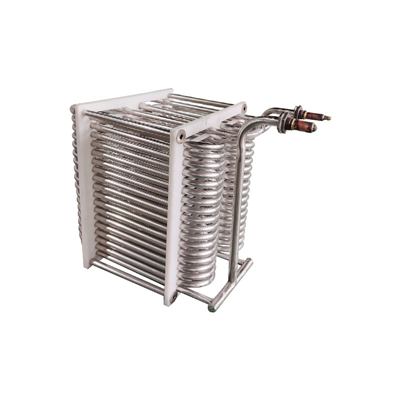
Whether you are in the HVAC, power generation, chemical processing, refrigeration, food and beverage, or oil and gas industry, our condensers can provide an effective solution for your heat transfer needs. We have a team of experienced engineers who can work with you to design and customize condensers that are tailored to your specific requirements.
Evaporator If you are interested in learning more about our condensers or are looking to purchase condensers for your operations, we invite you to contact us. Our sales team will be happy to discuss your needs and provide you with detailed information about our products and services. Let’s start a conversation about how our condensers can enhance the efficiency and performance of your systems.
References
- Incropera, F. P., & DeWitt, D. P. (2002). Fundamentals of Heat and Mass Transfer. Wiley.
- Cengel, Y. A., & Boles, M. A. (2015). Thermodynamics: An Engineering Approach. McGraw – Hill Education.
- Green, D. W., & Perry, R. H. (2007). Perry’s Chemical Engineers’ Handbook. McGraw – Hill.
Xiangshui Derkang Refrigeration Equipment Co., Ltd.
As one of the most professional condenser manufacturers in China, we’re featured by quality products and low price. If you’re going to buy discount condenser, welcome to get quotation from our factory. We also accept customized orders.
Address: No. 2, Xiaojian Town Entrepreneurship Park, Xiangshui County
E-mail: 505745223@qq.com
WebSite: https://www.xsderk.com/
