If you’ve ever walked through a construction site, a plumbing supply warehouse, or even the back of a manufacturing plant, you’ve probably glanced at the plastic pipes that carry water, gas, and even industrial fluids from one point to another. As someone who’s spent the last 12 years supplying plastic pipe machines to businesses large and small, I’ve watched that industry shift from relying on clunky, one-size-fits-all equipment to tools that are smarter, more efficient, and kinder to the planet. The last two years alone have brought advancements that don’t just make pipes faster to produce—they make them better, more consistent, and easier to use for end-users everywhere. Plastic Pipe Machine
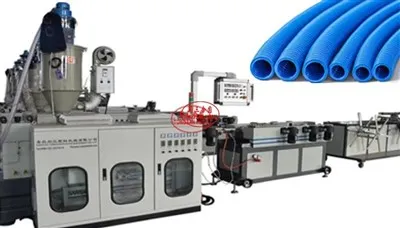
Let’s start with something that’s been on every producer’s mind lately: precision manufacturing. Five years ago, a lot of pipe machines relied on outdated sensor technology that could only check a pipe’s thickness or diameter once every few feet. That meant you’d have to toss out full lengths of pipe if a tiny glitch slipped through—something that ate into profits and created unnecessary waste. Now, we’ve started integrating in-line laser metrology systems that scan the entire circumference of a pipe every single second. These systems can detect variations as small as 0.02 millimeters, which is thinner than a human hair. A customer of mine that makes pipes for municipal water systems recently switched to machines with this tech, and they told me their scrap rate dropped by 18% in the first six months. That’s not just a number—it’s thousands of dollars saved and less material going to landfills.
I’ll be honest, when I first heard about AI being used in plastic pipe production, I was skeptical. A lot of manufacturers talk about “smart tech” that never seems to deliver. But the AI process control systems we’ve been testing with our newest machine lines? They actually work. These systems don’t just react to a problem after it happens—they predict it before it starts. Let’s say a screw in the extruder is starting to wear down, which would shift the temperature of the molten plastic and make the pipe’s wall uneven. The AI monitors tiny variations in pressure, torque, and melt viscosity that no human operator would notice. It adjusts the machine’s settings in real time—changing the speed of the extruder or the flow of cooling water—before the glitch becomes a defect. Another client, a mid-sized pipe producer that serves the residential plumbing market, now runs their night shift with only one operator instead of three. The AI handles 90% of the process adjustments, so the operator only has to step in for rare, complex issues. That’s freed up their team to focus on quality control and customer service, not just babysitting machines.
Sustainability is another area where we’ve seen huge leaps, and it’s not just about making less scrap. A lot of plastic pipe machines used to require large amounts of energy to heat and cool plastic resin. Our new lines incorporate variable frequency drives (VFDs) that adjust the machine’s power use based on what it’s producing. If you’re making a small-diameter pipe for a garden hose, the VFDs lower the heating and cooling output, cutting energy use by up to 25% compared to older, fixed-speed machines. Even better, there’s been a big push for machines that can work with recycled plastic, which used to be a nightmare for producers. Recycled resin has inconsistent melt properties—one batch might be more brittle, another might have more moisture. Old machines couldn’t handle that variability without creating defects. Now, we’ve paired our AI control systems with material moisture analyzers that adjust drying times and melt formulas on the fly, depending on the batch of recycled plastic being used. One of our European customers recently started making 100% recycled HDPE pipes for drainage, and they’re using the same machine that once only processed virgin resin. That’s a big win for both their bottom line and the planet.
I should also mention the shift in pipe design flexibility, which is something our customers have been asking for nonstop. A few years ago, if you wanted to make a pipe that was strong enough for industrial gas lines but flexible enough to bend around tight corners, you’d need two separate machines. Now, our new machines have modular tooling that lets you switch between pipe profiles in less than two hours—no custom parts or specialized technicians required. One customer who works on commercial construction told me this cut down their changeover time for a large project from three days to half a day. That means they can take on more jobs without investing in extra equipment, which is a game-changer for small to mid-sized businesses that don’t have unlimited capital. Even the tooling itself has gotten better—we’re using wear-resistant, chrome-alloy molds that last three times longer than traditional steel, so our clients don’t have to replace parts as often.
Of course, none of this tech is worth a dime if it’s hard to use. I’ve seen too many companies buy flashy new machines only to have their operators quit because the interface is impossible to figure out. That’s why we’ve focused on intuitive, touchscreen control panels that look and work like a smartphone or tablet. Operators can pull up a tutorial right on the screen if they forget a step, and we can even log in remotely if there’s an issue. Last quarter, a client in Texas had a cooling system glitch at 2 a.m. Instead of waiting for a technician to drive two hours out to their plant, our support team logged into the machine’s system, adjusted the cooling settings, and got production back up and running in 15 minutes. That’s not just convenient—it prevents thousands of dollars in lost production time.
Now, I’ll be the first to say that no advancement is perfect. There’s still work to do on making these machines more accessible to smaller producers. Some of the new AI and metrology systems do come with a higher upfront cost, but the ROI is real. We’ve had clients who recouped the extra expense in 12 to 18 months by cutting scrap, saving energy, and increasing their production capacity. And as the technology becomes more widespread, those costs are coming down too.
If you’re someone who’s in the market for a new plastic pipe machine, or you’re looking to upgrade your current setup, I’d encourage you to ask questions that go beyond just price. How does the machine handle recycled plastic? What kind of precision technology does it have? Can it adjust to different pipe profiles easily? The latest advancements are meant to make your job easier, not more complicated.
At the end of the day, I’ve been in this industry long enough to know that the best machine isn’t the one with the shiniest new tech—it’s the one that fits your specific needs. Whether you’re making small-diameter pipes for residential plumbing, large industrial pipes, or sustainable products from recycled material, the current technology has something to offer.
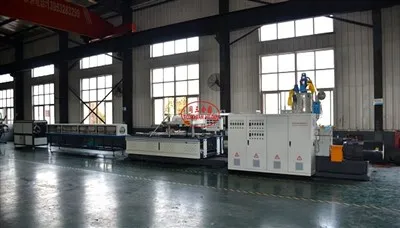
If you’re ready to stop dealing with constant defects, high energy bills, and long changeover times, I’d be happy to walk you through the latest options that make sense for your business. Don’t hesitate to reach out to our team to discuss your specific requirements and see how our machines can help you streamline production and grow your bottom line.
Plastic Sheet Machine References:
- Plastics Pipe Institute. (2023). Annual Report on Plastic Pipe Manufacturing Technology and Efficiency.
- European Plastic Converters Association. (2024). Sustainable Manufacturing Advances in Plastic Pipe Production.
- International Organization for Standardization. (2023). Standards for Precision Metrology in Plastic Extrusion Machinery.
- McKinsey & Company. (2022). Digital Transformation in Industrial Machinery: AI and Process Control for Manufacturing.
- U.S. Energy Information Administration. (2023). Energy Efficiency Improvements in Industrial Extrusion Equipment.
Qingdao Tongsanhegu Plastic Machinery Manufacturing Co., Ltd.
With abundant experience, we are one of the most reliable plastic pipe machine manufacturers and suppliers in China. We warmly welcome you to buy durable plastic pipe machine for sale here from our factory. Quality products and reasonable price are available.
Address: West of Xixinzhi Village, Sanlihe District Jiaozhou, Qingdao City, Shandong Province, China
E-mail: info@tongsanhegu.com
WebSite: https://www.tongsanhegumachine.com/
