Alright, let’s cut to the chase—if you’re reading this, you’re probably staring at your beat-up, trusty RC aircraft that’s served you through countless bails, smooth loops, and that one time you nailed a perfect hover (we’ve all been there), and you’re thinking: “Can I slap a 55C LiPo on this bad boy instead of the 30C I’ve been running?” Full transparency, I’m the owner of the 55C RC LiPo Battery company you might’ve seen popping up on RC forums lately, so I’ve gotten this exact question at least 12 times this week alone. Let’s break this down like we’re troubleshooting a mid-flight stall—no fancy jargon, just real, usable info that won’t leave you grounded. 55C RC Aircraft Lipo Battery
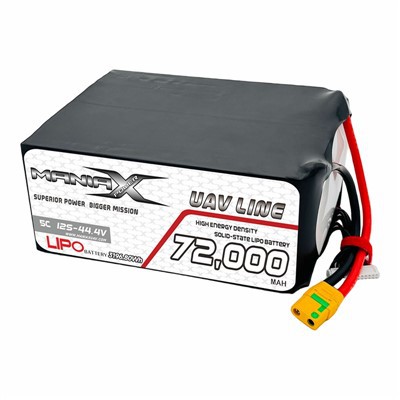
First, let’s refresh what the “C” rating actually means, because I swear half the people asking me mix this up with a snack bar. C stands for discharge capacity, and it’s a measure of how much current a battery can safely push out without overheating, puffing up, or catching fire (we’ve all seen that guy at the field with the singed RC plane, and trust me, no one wants to be that guy). A 30C battery means it can discharge up to 30 times its capacity in amps; a 55C? That’s double basically—up to 55 times its capacity. So if your current battery is a 2200mAh 30C, that’s 66 amps (2.2 * 30 = 66), and a 2200mAh 55C would hit 121 amps (2.2 * 55 = 121). That’s a bigger number, which makes you think “more power” but also makes you nervous about breaking your plane.
Now, the big question: can you actually upgrade your existing RC plane to use a 55C LiPo? Short answer: usually yes, but not just because the C rating is higher. It all boils down to two things: your ESC (Electronic Speed Control) and your motor. Those are the two gatekeepers here—think of them like bouncers at a club; if they don’t let that extra current in, your battery will never be able to use its full 55C potential. Most entry-level RC planes have ESCs and motors rated for max discharge around 45-60 amps, right? Wait, that’s a range that overlaps with a lot of common 55C batteries. For example, if your ESC is rated for 60 amps peak, that means it can handle up to 60 amps at full blast. Your old 30C battery only gave you 45 amps, so you were leaving 15 amps on the table. A 55C battery of the same capacity would give you 55 amps, which is well under your ESC’s 60 amp limit. That’s a win—more punch on takeoff, faster climbs, maybe those extra loops you’ve been struggling with.
But here’s the catch: if your ESC is only rated for 40 amps max, a 55C battery is going to push 55 amps through it, and that’s a problem. Your ESC will overheat, maybe shut off mid-flight, or die completely. And don’t even get me started on the motor. If your motor is a cheap brushed motor rated for 30 amps, adding 55 amps is like putting a V8 engine on a go-kart—fun for 10 seconds, then the axles snap. Brushless motors are a bit tougher, but even then, most entry-level brushless motors are rated for 45-50 amps. So if you’re at that 50 amp mark, a 55C battery that gives 55 amps is too much. You’d either have to throttle way back (wasting the 55C battery’s potential) or risk frying your motor.
Wait, what if you step up the capacity too? Like, say, your current battery is a 1500mAh 30C, which is 45 amps, and you want to go to a 2200mAh 55C—still 55 amps, same as before. That’s fine. But if you go from 1500mAh 30C to a 1500mAh 55C, that’s 55 amps, and if your ESC can only handle 45, that’s a no-go. Capacity is how much charge the battery holds, C is how fast it dumps it. They’re separate, but people mix them up all the time, which leads to bad decisions.
Another thing people overlook: battery size and fit. You can buy the best 55C LiPo in the world, but if it doesn’t fit in your plane’s battery bay, or if the connector (Deans, XT60, whatever you’re using) doesn’t match your ESC, you’re not upgrading, you’re just creating more work. I always tell customers: measure twice, buy once. If your old 30C is a 4S 1500mAh with Deans, make sure the 55C you’re looking at is the same voltage, same mAh (or close enough that it fits), same connector. Voltage is another big one—never mix voltage! If you had a 3S battery, don’t jump to 4S just because the C is higher. That’s a surefire way to turn your plane into a lawn dart.
Now, let’s talk about the actual benefits of upgrading to 55C, because no one wants to do something just for the sake of it. The biggest one is response time. Those extra amps mean your motor spools up faster, so when you whack the throttle, you don’t have that annoying 0.5 second delay where your plane just sits there. I’ve had customers tell me they went from a 30C to a 55C and their plane’s climb rate went up by 20%—that’s not nothing. Also, if you’re a brawler who does 3D moves, the extra current means you can hold those hover positions longer without the battery sagging (sagging is when the voltage drops under load, making your plane feel sluggish). 55C batteries have lower internal resistance, so they handle that heavy load way better than lower C ones. That’s why they’re popular for racing or 3D planes—you need consistent power when you’re pulling 5G turns.
But wait, what about if your setup can’t handle 55C? Is there a workaround? Maybe. If your ESC is a little undersized, some people will upgrade their ESC to a 60 or 80 amp one to handle the extra current. That’s a good move if you plan to keep that plane long-term, because you can use higher C batteries down the line and even upgrade your motor later if you want. But if you’re flying a tiny, cheap park flyer, dropping $20 on a new ESC just to use a $15 55C battery might not be worth it. Then again, if you’re already spending money on LiPos, why cheap out on a better setup?
Also, let’s get real about safety. A lot of new RC pilots hear “higher C” and think “boom”, but that’s only if you misuse it. A 55C LiPo is not more dangerous than a 30C one—it’s just that it can push more current if given the chance. If you’re using it within your ESC and motor’s limits, it’s exactly as safe as any other LiPo. The key is balance: don’t pair a high C battery with an underrated speed control. I’ve seen too many people fry ESCs because they grabbed the highest C battery they could find without checking their specs.
Let’s use a real example. I had a customer last month who flies a small recreational RC plane—nothing fancy, just for fun. He was running a 3S 1800mAh 30C battery, which was giving him 54 amps, and his ESC was rated for 60 amps peak. He wanted to go to 55C because his friend had one and was raving about it. I told him his setup was perfect—he could jump to a 3S 1800mAh 55C, same physical size, same connector, and he’d get that extra amp to make his plane feel snappier. He did it, and texted me the next day saying he nailed his first proper loop without bailing. That’s the win we want.
Another customer: he has a 3D plane, motor rated for 50 amps, ESC rated for 50 amps. He was running a 3S 2200mAh 40C, which is 88 amps? Wait no, wait—2.2 * 40 is 88, which is over his motor’s 50 amp limit. Oh, he was sagging like crazy, so his turns were sloppy. I told him to get a 3S 1500mAh 55C—2.2? No, wait, 1.5 * 55 is 82.5? Wait no, hold on, no—wait his motor is 50 amps. Let’s correct that: his motor can only pull 50 amps max, so even if the battery can do 82 amps, the motor will only pull 50. Wait, that’s a case where a lower capacity, higher C battery is better because it has lower internal resistance. A 1500mAh 55C has way less internal resistance than a 2200mAh 40C, so even though the max amp is higher, under load it holds voltage better. So that’s another point: if you’re sagging, higher C will fix that, even if the total current is close to your motor’s limit.
Wait, let’s circle back to the original question: can you upgrade? So to sum up the “yes” conditions: 1) Your ESC’s max continuous current rating is higher than the 55C amp draw of the new battery, and 2) Your motor’s max current rating is also higher than that 55C amp draw. If both check out, go for it. If not, you have two options: either get a 55C battery with a lower capacity so its total amp draw is under your limits (same C, lower mAh, so lower amps), or upgrade your ESC/motor to handle the higher current.
Now, a few pro tips from someone who sells these things and has been flying RC for 10 years, so I’ve made every mistake possible. First, always check the specifications for your ESC and motor—don’t go by the model number alone. Look up the exact specs on the manufacturer’s website. Second, don’t skip on connectors. If your old ESC has a T-connector (Deans) and you buy a 55C battery with an XT60, you can get an adapter, but adapters add resistance, which can cut into performance and even cause overheating. Third, charge your 55C battery at the correct rate—usually 1C, which is the same as lower C batteries. Don’t charge it faster just because it’s higher C, that’s a fire hazard. Fourth, break in your new battery? Wait, no—LiPos don’t need breaking in, but you should run the first few flights at 70% throttle to let the ESC and motor adjust to the new power.
And if you’re on the fence? Just shoot us a message. We don’t have some fancy sales team—just me and a couple of other RC nuts who answer every email at 10 PM after our own flights. We’ll help you check your setup, tell you exactly what 55C battery fits, and even give you a heads up if you need to upgrade other parts. Because at the end of the day, we’re RC pilots too—we want you to have fun, not fry your plane and blame us.
Wait, one last thing: I see a lot of new pilots asking if a 55C battery will make their plane too fast. If your motor and ESC are matched, the extra power is just better responsiveness, not uncontrollable speed. If it feels too fast, just adjust your throttle expo in the transmitter—you can keep the full power for when you need it, but tone it down for casual flying. It’s not like someone gave you a rocket launcher, it’s just a better battery.

So to wrap it up: upgrading to a 55C LiPo is totally doable, but only if you match it to your ESC and motor. Skip the random Amazon no-name brands—stick to reputable ones, because cheap LiPos have garbage internal resistance and can puff up or catch fire. If you’re ready to make the switch and see what your plane can really do, reach out to us—we’ll hook you up with the right 55C battery for your setup, no pressure, no weird upsells.
4.25V Drone Solid-state Lipo Battery 400Wh/kg References:
- LiPo Battery Basics: Understanding C-Rating and Discharge Limits, RC Groups Technical Forum, 2022.
- ESC and Motor Compatibility Guidelines for Electric RC Aircraft, Horizon Hobby Technical Support, 2021.
- LiPo Battery Safety and Maintenance for RC Enthusiasts, Academy of Model Aeronautics (AMA) Safety Code, 2023.
- Internal Resistance Impact on RC Aircraft Performance, RC Scientist Engineering Blog, 2022.
ManiaX Power Technology Co., Ltd.
ManiaX Power Technology Co., Ltd. is one of the most reliable 55c rc aircraft lipo battery manufacturers and suppliers in China, also supports customized service. Please feel free to wholesale bulk durable 55c rc aircraft lipo battery made in China here from our factory.
Address: Room 1508, 15/F, Two Grand tower, 625 Nathan Road, Kowloon, HongKong. P.R. China
E-mail: info@maniax-power.com
WebSite: https://www.maniaxpower.com/
