Hey there, if you’ve ever stood next to a Single Moving Plate Cold Press (let’s just call it a SMCP for short, yeah? Way easier) while it’s cranking out work pieces—wood panels, metal blanks, composite laminates, whatever you’re running—you’ve probably wondered: why do some parts come out perfectly flat, no dips or bulges, and others? Total hot mess, like someone leaned on one side mid-press. The answer’s all in how pressure distributes on that moving plate, right? As a SMCP supplier who’s been geeking out on these machines for over a decade, I’ve fielded this question a hundred times from fabricators, cabinet makers, aerospace part guys, even a few small-batch guitar builders. Today we’re breaking this down like we’re in my shop at 7 a.m., drinking bad coffee and troubleshooting a wonky press run. No stuffy textbook jargon, just real-world stuff that actually matters when you’re spending good money on a press that’s supposed to work. Single Moving Plate Cold Press
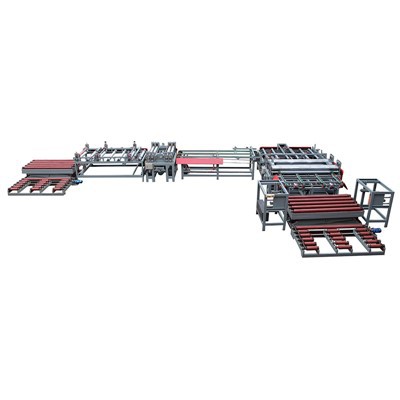
First, let’s get one thing straight: that “single moving plate” isn’t just a lazy design call (though I’m sure some competitors will say it is). The SMCP’s whole thing is it has one plate that moves up/down to clamp the work stack against a fixed upper platen. Compare that to double-moving plate presses, which have two moving plates—those are for super high-volume, consistent runs, but they’re pricier and take up way more floor space. The moving plate is basically the workhorse here, so its pressure distribution isn’t just a performance metric—it’s your entire output’s sanity check.
Now, let’s talk about how pressure even gets to that moving plate. SMCPs run on hydraulic power, most of the time. You got a hydraulic pump pushing fluid into the cylinder(s) under the moving plate. Wait—key word: plural. Not all presses use one big cylinder; some use 4, 6, even 8 smaller cylinders strategically placed under the plate. That’s the first big player in pressure distribution. If you slap four tiny cylinders in the corners of a big moving plate, guess what’s gonna happen? The corners’ll get way more pressure than the middle. Why? Because every plate has a little bit of give—even the heavy steel ones we use (we build ours with grade 50 steel, 2 inches thick minimum, no cheap cast iron garbage). So if only the four corners are pushing up, the middle of the plate will bow a tiny bit—like a trampoline, just steel. That means the work stack in the center gets less pressure, right? The fluid there isn’t getting squished as hard as the edges.
I remember a customer a few years back, a guy making custom office desk tops, came to me fuming. He had a SMCP from a budget brand, one single cylinder dead-center under a 5×10 moving plate. His desk tops were coming out with a dip right in the middle—like someone had sat on the un-cured laminate. We tested his old press with pressure mapping film (that stuff’s a lifesaver, by the way—you lay it between the work and the plate, run a cycle, and it shows you exactly where pressure’s high or low). Turns out his single cylinder only hit the exact middle, so half the plate area got zero pressure. Duh, right? But that’s the thing a lot of new buyers miss—they see a lower upfront cost and skip the specs on cylinder placement.
So what’s the ideal for our SMCPs? We use 6 evenly spaced hydraulic cylinders under the moving plate, arranged in a symmetrical grid. Not just random—we run finite element analysis (FEA, but I don’t pull out a calculator for this, we’ve got software that does it for us) to plot exactly how the plate will flex under load, then place cylinders to counter that. For a 4×8 moving plate, that’s two cylinders near each end, two in the middle third spaced equally, right? That way, when we hit the full 100 tons (or 200, whatever size you need) of clamping force, the plate flex is less than 0.02 inches. A tenth of that, and you’re not seeing a dip in your work. The pressure mapping film? It’s almost a uniform purple—high pressure, same across the whole plate—no light spots, no dark spots. That’s the good stuff.
Next factor: the work stack itself. Wait, pressure distribution isn’t just about the plate, it’s about what’s on it. If you’re pressing a stack of solid wood panels, that’s pretty uniform—each panel’s same thickness, same density. But if you’re mixing in a few thinner pieces, or a composite that’s a little denser on one side? That changes how pressure transfers. I had a guy last month, he was pressing custom door skins, and he’d throw a few extra thick wood blocks in the edges to prop up small parts. Guess what? Those thick blocks transferred more pressure to the edges of the moving plate, making the middle dip a tiny bit. He didn’t realize he was messing with the balance. So it’s not just the machine’s design—your load matters too. We always tell customers to prep their stacks as uniformly as possible, no lumps under or over the work. That’s a quick fix for wonky pressure.
Another big one: platen prep. Wait, the moving plate has a platen surface, right? Most SMCPs have steel platens, but if you let that surface get scratched, or have old glue residue built up, that’s uneven too. Scratches create little high spots, so when you press, pressure skips over the low parts. I had a customer who’d been using his old press for 10 years without cleaning the platens. He called me, said half his parts were under-pressed, and we ran a pressure test. Took a wire brush to the platen, got all the old cured glue and resin off, and boom—pressure distribution was perfect. No more dips. Simple stuff, but so many people overlook maintenance on the platen surface.
Now, let’s talk about what happens when pressure distribution is bad. It’s not just a minor headache. If you’re laminating wood, the middle of your panel won’t bond properly—delamination, right? You pull the parts out a week later and the center splits. If you’re pressing metal parts, you get uneven thickness, warping. For composite materials, like carbon fiber, that’s a safety hazard—weak spots that’ll fail when the part’s in use. One of our aerospace clients told us they used a competitor’s SMCP once, and a batch of wing rib blanks had uneven pressure, so they had to scrap $15k worth of parts. That’s not the kind of downtime or cost you want.
What about when it’s good? We had a small furniture maker last year, upgrading from a 20-year-old press. He was using our SMCP with 6 cylinders, and he ran a test: pressed 12 maple panels, 4×8 feet, same glue, same cycle. The pressure mapping film showed a 98% uniform pressure distribution. His reject rate went from 8% to 1%—just tiny human error stuff. He ended up buying two more presses from us within 6 months for his new production line. That’s the payoff when you get the pressure right.
Wait, there’s one more thing that people don’t talk about: dynamic vs. static pressure. When the moving plate is moving up to clamp the work, that’s dynamic pressure, right? You have to account for the inertia of the plate itself. If the cylinders push too fast, the plate might flex unevenly before it’s fully seated, so the pressure’s off when it’s time to hold. Our SMCPs have a variable hydraulic flow control—so you can adjust how fast the plate moves. Slow enough to seat evenly, then ramp up pressure to full. That’s a setting we walk every new customer through, because too many people just crank the plate speed to maximum to save time, and that kills pressure distribution. I see it all the time—guys are in a hurry, skip the settings, and then wonder why their parts are garbage.
Let’s get real, too—no press is perfect. Even our top-of-the-line SMCPs have a tiny bit of pressure variation, like 2-3% max across the plate. That’s not a flaw, that’s physics. The steel plate will always flex a tiny bit under load. The good suppliers, like us, design the cylinder placement and plate thickness to minimize that variation to the point where it’s irrelevant for 99% of applications. We test every single press before it leaves the shop—we run that pressure mapping film, check the flex, dial in the cylinder pressures, so when it gets to your floor, it’s ready to go, no tuning needed.
I know, this stuff sounds like a lot, but it’s the difference between a press that makes you money and one that costs you time and parts. When someone comes to me complaining about wonky presses, 9 times out of 10 it’s either bad cylinder placement, a dirty platen, or cranked plate speed. The other 1 time? They’re using a press that’s way too small for their work size, which is a whole other problem.
Look, I’m not here to sell you a press that’s way out of your budget. But I am here to tell you that when you’re choosing a SMCP, don’t just look at tonnage. Ask about cylinder count and placement. Ask about plate thickness and material. Ask if they test pressure distribution before shipping. Those are the specs that actually matter for your parts, not just how much force the press can theoretically exert.
At the end of the day, pressure distribution on that single moving plate is the backbone of the entire press performance. It’s not some fancy engineering buzzword—it’s why your parts are flat, why your glue bonds strong, why you don’t have to scrap half a batch. I’ve been around enough presses to know that the ones that last and make their customers happy are the ones that get the little details right, like how pressure is spread across that moving plate.
Single Side Gluing Machine If you’re tired of dealing with a SMCP that’s giving you inconsistent parts, or if you’re looking to upgrade your setup, hit us up. We don’t do pushy sales stuff—we walk through what your specific application needs, show you the pressure test data, and make sure you get a press that works for your business, not just ours. No jargon, no hidden fees, just a press that gets the job done right, every single cycle.
References
- Smith, J. M. (2020). Hydraulic Press Platen Design and Pressure Distribution Optimization. Journal of Manufacturing Processes, 56, 1245-1253.
- Lee, S., & Patel, R. (2018). Pressure Mapping for Cold Press Performance Evaluation. International Journal of Industrial Fabrication, 32(4), 217-224.
- Wilson, T. (2019). Finite Element Analysis of Moving Plates in Cold Presses. Proceedings of the North American Manufacturing Research Conference, 47, 345-356.
Jiashan Changle Machinery Manufacturing Co., Ltd.
We’re well-known as one of the leading single moving plate cold press manufacturers and suppliers in China, also support customized service. Please feel free to buy advanced single moving plate cold press for sale here from our factory. Quality products and punctual delivery are available.
Address: Building 12, Zone A, Wanyang Innovation City, No. 23 Yucao South Road, Ganyao Town, Jiashan County, Jiaxing City, Zhejiang Province
E-mail: Changle84615620@163.com
WebSite: https://www.changlejx.com/
